Showing posts with label Volkswagen. Show all posts

Friday, September 16, 2011

Kecewa dengan Suzuki, VW Pasarkan Up! di India


Kekecewaan Volkswagen AG (VW) terhadap mitra strategisnya, Suzuki Motor Corporation, pasca pelanggaran kerja sama yang terjadi beberapa bulan terakhir mulai terlihat. Produsen otomotif asal Jerman ini memutuskan untuk membatalkan kerja sama produksi mobil kecil menggunakan platform A-Star dan Wagon R milik Maruti Suzuki.

Motorbeam kemarin melansir, VW akhirnya bergerak sendiri, bersaing langsung dengan meluncurkan produk terbarunya, up!, mulai tahun depan. VW akan memperkenalkan mobil kecil ini di Indian Auto Expo pada Januari 2012. VW baru saja mengumumkan mulai menjual up! pada awal pekan ini di ajang Frankfurt Motor Show 2011.

Dengan tampilan dan fitur yang disertakan pada up!, mobil kecil ini diperkirakan punya daya saing cukup baik di pasar city car India. Untuk menekan harga jual, VW akan merakit up! di India dengan kandungan komponen lokal lebih tinggi. Harganya, untuk versi paling murah diperkirakan 3 lakh (Rp 55,5 juta).

Dijelaskan pula, up! India akan dibekali mesin 1.2 liter diesel TDi dan disediakan varian bensin dan siap bersaing dengan Maruti Suzuki WagonR, Honda Brio, dan Hyundai Eon.


sumber : kompas

Thursday, September 15, 2011

VW Beetle R Konsep Performa Tinggi


Dalam gelaran Frankfurt Motor Show 2011 yang dibuka untuk umum hari ini (15/9), VW tak hanya menampilkan Up versi jalan raya dan buggy sebagai ikon. Model lain yang diperkirakan mampu menarik perhatian pengunjung yaitu Beetle R Concept.

Ini menandakan varian Beetle resmi masuk dalam jajaran produk high performance VW dengan emblem 'R'. Sama halnya dengan Honda yang memiliki beberapa produk serupa dengan logo Type-R, atau Ford dengan logo RS.

Mobil yang diluncurkan dengan slogan 'Sporties Beetle Ever' ini mengadopsi mesin 2.0 TSI yang mampu mengeluarkan tenaga 197 hp. Angka tersebut masih di bawah rata - rata anggota varian 'R' yang sudah berada di atas 200 hp, seperti Golf (266 hp) dan Scirocco (261 hp).

Profil yang ditampilkan lebih pendek dan buntet dibalur warna favorit 'Serious Grey'. Bentuk bemper sporti di tambah lubang angin di bagian bawah yang terbagi 3 sektor. Bagian tengah dengan lubang yang cukup besar (air dam) berfungsi sebagai pendingin mesin dan 2 lainnya untuk menurunkan suhu panas rem. Desain bemper ini ternyata berdimensi lebih lebar 30 mm dari ukuran Beetle yang beredar saat ini. Bentuk bonet tak semulus varian standar karena di sisi kiri-kanan terdapat air scoop sebagai ventilasi udara tambahan.

Sedangkan pada bagian belakang dihias dengan aplikasi diffuser dan spoiler yang berdimensi lebih besar. Lingkar roda berdiameter 20 inci - lebih besar dari Golf dan Scirocco- ikut menguatkan karakter sporti.

Nuansa interior tak kalah sporti dengan aplikasi jok bergaya balap Black Nappa berbalut kulit, pedal corak aluminium, sill plates pintu dengan instrument cluster sebagai ciri dari varian R.

foto lainnya :


sumber : kompas

Friday, July 1, 2011

New Volkswagen Amarok


Here is Volkswagen Amarok. The name Amarok is taken from Inuit language that means ‘wolf’. This vehicle has been launched on the market in 2010. This Volkswagen Amarok features 4-door with double cab and single cab. The front end design of this Volkswagen pickup variant is inspired from VW design DNA. The Volkswagen Amarok that features single can was targeted for 2011. The VW pickup that features ladder frame chassis was designed in long of 5.25 m. This VW Amarok is also available in an option of switchable and permanent 4MOTION all wheel drive as well as rear – wheel drive.
This Amarok pickup is able to pickup until 1.15 tons of burden with maximum burden weight 2.8 tons. The cargo space of this new pickup measures 2.52 sq m, it’s designed with highest dimension with wide of 1,620 mm and long of 1,555 mm.
Pickup Commercial Variant
Pickup Commercial Variant, VW Amarok

Friday, June 24, 2011

New VW Beetle


Volkswagen Beetle Variant
Volkswagen introduced the next generation of modern car: called as Beetle. At first glance, compared to the first “new Zhuk” 1998 there is no much difference, except on the roof line which is designed is more traditional style. Compared with its predecessor, this VW Beetle is designed longer, wider and lower. Beetle’s body proportions are more athletic and muscular. The dimensions of the new model is length of 4278 mm (+152 mm), width 1,808 mm (+84 mm), height 1,486 mm (-12 mm). The wheelbase measures 2,537 mm.
The design team of this Volkswagen Beetle is led by Walter de Silva (chief designer of VW Group) and Klaus Bischoff (chief designer brand Volkswagen). The design chalenge was to preserve the famous silhouette of the “Beetle” and make it even more recognizable. The designer of this exterior car, Marc Lichte (Marc Lichte) makes this new Beetle become closer to the original Beetle 70-year-old  [source:cardesign.ru]
Volkswagen Beetle Variant-white exterior

Thursday, June 9, 2011

Volkswagen Go! Concept with Improved Interior Space


Together with VW Tex concept, VW Go! Concept was unveiled by Volkswagen at the 2011 Geneva Motor Show. The design of Go! Concept car variant by Volkswagen is oriented on the interior development. Among the features are large glass elements, extended wheelbase and ergonomic interior space. Italdesign develops this VW Go! variant to create compact car with maximizing interior space. The length of car is 3,990 mm and it’s combined with 2,700 mm wheelbase for creating distinctive looks on the exterior design of the car. On this VW car, the conventional mirrors have been replaced by the side camera. The interior of this vehicle give 4 identical seating units whereas the panel instrument has widescreen display to inform main informations.
Exterior Design
Volkswagen Go! Concept with Improved Interior Space
Designed for the city, the Go! together with the sporty Tex could increase the wide range of Volkswagen products to A0 segment even more.
With the same wheelbase as that of the Passat – 2700 mm – the Go! is a hatchback boasting a total length of 3990 mm thanks to its smaller overhangs. The battery pack is housed underneath the front and rear seating positions.

Volkswagen Go! Concept with Improved Interior Space-side detail
This vertical package allows for the Go! a weight distribution of 58% on the front and 42% on the rear.
“With this exercise I wanted to continue the design of a car able to offer maximum utilization of its interior,” Giorgetto Giugiaro stated.
“The project started with the 1976 New York Taxi, and continued with the 1978 Megagamma, the 1998 Structura and then came to maturity with the 2010 Emas.”
“The Go! is less than 4 metres long, but offers more passenger room than that of a large SUV and has a 400 up to 525-litre boot, ideal for city use.”
The design of the exteriors is dominated by extensive glass surfaces, in clear contrast with the trends of recent years of providing cars with increasingly smaller windows.
In addition to filling the passenger compartment with light and giving its occupants the chance to thoroughly enjoy city scenery, also thanks to its totally glass roof, this design offers the driver with maximum visibility while driving.
The A pillar is in particular considerably farther forward than its traditional position, and the bulk of the door mirrors is eliminated by using cameras.
The side windows also extend beneath the waistline – markedly high and optically taken up again by adding a longitudinal structure that crosses the side windows – drawing on a solution introduced in 1988 with the Asgard prototype.
This lets the driver benefit from maximum visibility even during manoeuvres and when taking tight curves.
Like in the Emas, only the lower part of the windows (the part beneath the longitudinal structure) can be electrically lowered.
This solution reduces the weight that the electric window mechanism has to support to a minimum, and is in any case necessary for meeting all of the essential operations such as paying tolls or refuelling.
The seat H point (corresponding to the passenger hip position) is located higher than that of mass-produced cars but lower than that of an SUV. This solution makes getting in and out of the passenger compartment extremely comfortable.
An electronically driven system pushes the door outwards and pulls it back parallel to the vehicle body for gaining access to the rear seats.
This mechanism, which draws on the one used on the VW Milano Taxi (presented in May 2010), offers the advantageous practicality of sliding doors but without sacrificing their section (room is found inside for a comfortable armrest) and makes it possible to do away with the unattractive tracks on the body typical of this solution.
Without sacrificing the family feeling typical of the Golf and the Golf Plus, the Go! offers innovative solutions both in the front and back that combine aesthetic pleasure with practical functionality.
The grille, dominated by the large VW badge in the centre, incorporates the front light clusters with Xenon/LED technology.
The air intake is placed at the height of the fog lights and horizontally splits the front spoiler, adjusting the air flow necessary for cooling the front electric motors.
The tailgate reintroduces the theme of the glass surfaces interrupted by a longitudinal insert that not only optically takes up the theme characterizing the side view, but conceals the windscreen wiper and rear cameras that turn on when the reverse gear is engaged.
To make loading luggage easier, the tailgate can be operated electronically for both opening and closing. A sensor that activates the opening mechanism by simply moving the foot is also fitted underneath the bumper.
The light clusters are positioned under the glass surface and are invisible when the panel is off. When the tailgate is opened, they are repeated by two additional taillights located in the lower part of the bumper, beside the rear air intake, which also house the rear fog lights.
Interior Design
All of the elements of the Go! Concept interior have been styled and designed focusing on ergonomics.
The driver and three passengers sit on four identical and electronically adjustable seats. Those in the rear can also be folded down using an electronic adjustment mechanism and with remote control, and they form a single surface on the rear floor panel level to increase the maximum loading volume to 525 litres.
A storage console/sliding armrest sits between the front seats. If completely pulled back, it aids the driver when getting out from the passenger side.
This solution is particularly useful if parking is narrow or if there are objects blocking the opening of the left door.
The control panel displays the most important information such as speed, fuel consumption and fuel level directly at the base of the windscreen, at the rear of the deep dashboard.
Giugiaro was extremely keen on this solution. “With the controls positioned in this way, the driver does not have to continuously change his focal length between the foreground of the dashboard and the long surface of the road in front of him. With this layout he can keep his eyes set on the road, distraction-free, and have all of the information necessary for driving available at all times.”
The monitors of the rear view cameras are also at the base of the windscreen, but at the two side ends. The dashboard contains a touchscreen monitor in the classic position. It groups together all of the auxiliary controls, the infotainment system, the satellite navigation system and, when the reverse gear is engaged, the images of the camera for manoeuvring.


The Two Doors Car, Volkswagen Tex Concept


At the Geneva Motor Show 2011 Volkswagen has revealed a new sporty car version called Volkswagen Tex Concept. This new VW car version is a result of design study on a sporty yet compact car which is completed with 2 doors. The car is equipped with a plug-in hybrid powertrain. The front end detail feature wide surface and trapezoidal grille that mounts the Volkswagen logo and headlights. The eye catching elements which are found on the side detail are the sculpted surface which emerges from the air exit on the back side of front wheels and the raising waistline. The 19 inch wheels on this VW Tex variant create sporty appearance.
Press Release:
Sporty yet Elegance Two Doors Car, Volkswagen Tex Concept
Exterior Design
Four real seats, front wheel drive and a gently aggressive line, the Tex fits into a long tradition of Volkswagen brand sports cars.
Volkswagen Tex Concept-side
“We designed the Tex in actual fact thinking to the Volkswagen sports cars of the years to come,” commented Fabrizio Giugiaro, deputy chairman and style manager of Italdesign Giugiaro.
“We intentionally kept a family feeling that would immediately identify it as a Wolfsburg product close to production. No visionary or futuristic choice was made, but it is rather a natural evolution of today’s canons with the addition of a few technologies that will shortly become available on the market.”
Compact, very low (1355 mm in height) and 1750 mm wide, the Tex at first glance looks like a sports car with great grip on the road, stressed by the large 19? wheels at the ends and generous wheel arches.
Its set-up is that of a classic two-door coupé whose clearly sporty personality is emphasized by an aggressive front and its rear flaunting two spoilers.
The side view is marked by lines that sculpt the doors next to the air exit of the front wheels and its waistline that rises up toward the tail.
The front is distinguished by a slender grille that encloses the light clusters in an unprecedented trapezoidal shape and three air intakes in the bumper/spoiler zone, necessary for cooling the brake discs and 1.4-litre turbo engine.
The VW badge sits in the centre of the grille and is optically underscored by the V-shaped groove of the hood. Windscreen and roof are a single piece of glass that becomes dark electronically.
The large rear window dominates the rear and accommodates two spoilers, with the windscreen wiper housed in one at the bottom.
Like the Go! previously, the light clusters are under the windscreen and are invisible when the panel is off.
Access to the luggage compartment is permitted by raising just the rear window and, once it is open, the light indicators are repeated by the two supplementary tail lights located in the lower part of the bumper, at the sides of the rear air intake that also contains the rear fog lights.
Interior Design
As in the Go!, the Tex’s interiors have also been designed to offer the occupants maximum space and maximum ergonomics.
The passenger compartment is definitely geared to the driver. All of the instruments are positioned in a functional manner and wrap around the driver so as to leave the passenger an incredible sensation of space.
The large dashboard containing the controls and driving information grows smaller as it approaches the door panels so as to make getting in and out of the passenger compartment easier.
“We designed the interiors so that the first sensation would be that of entering a sports car,” continued Fabrizio Giugiaro.
“The driver has to be able to find himself, and this is why we chose finish details and elements that refer back to the classic idea of the sports car. We have adopted the large gear knob and leather interiors, with the speedometer and rev counter situated in the classic position behind the steering wheel and with ‘analogue’ graphics, precisely for that reason”.
If the outfitting is classic in style, the contents are instead full of the maximum technology available today. All of the controls and indicators are housed in LCD screens, as is the infotainment console put on a touchscreen in the centre of the dashboard, set in a transparent structure that lays bare the structure.
The dashboard is separated from the central tunnel, an unusual solution for a car, but wraps around the driver with a graphic and colour continuity.
The two rear seats are independent and can be folded down.
The name ‘Tex’
“Besides the one for cars, Walter de’ Silva, Fabrizio and I share another passion: the one for Italian comics hero, ranger Tex Willer”, said Giorgetto Giugiaro.
“We wanted to name the coupé after the legendary ranger, as a homage to the men who wrote and drew important pages on our popular culture.” “Thanks to Mr. Sergio Bonelli’s kindness and helpfulness we finally could realize this unique operation. And, in the end, our prototype, just like the real Tex, has a strong heart and a gentle soul”.

Saturday, May 21, 2011

Volkswagen Bulli Concept Car


At the 2011 Geneva Motor Show, Volkswagen presented a new car variant entitled as Bulli Concept which is also called as Microbus’. This new microbus is designed with an electric powertrain and 6 passenger cabins. The exterior design of this Bulli variant is a blend between modern lines influenced by Design DNA. The original accent of Bulli is the two-tone paint theme and the front end design with special “V” shape. Below is complete description from the official press release:
The Design
Volkswagen Bulli Concept
The team led by Walter de Silva, Head of Volkswagen Group Design, and Klaus Bischoff, Head of Design of the Volkswagen brand, developed the “design DNA” for the modern era based on styling principles of the bestselling Beetle, Golf I and T1.
The new edition of the Bulli is 3.99 metres long, 1.75 metres wide and 1.70 metres tall. The T1 was somewhat longer and taller, but narrower.
Volkswagen Bulli Concept
With a wheelbase of 2.62 metres, the Bulli utilises the overall length very well. Also striking here are the Bulli’s relatively large track widths (1.50 m front and rear) in relation to body width.
Front end
Like the Samba bus before it, the Bulli being presented in Geneva also has two-tone paint – in this case white and red. The “V” on the bonnet, is kept white.
The hood does house the engine: instead of rear-wheel drive with a boxer engine, as on the Samba, the Bulli has an electric motor located forward of the front axle and front-wheel drive.
In keeping with the Volkswagen design DNA, there is a horizontal layout of the narrow dual headlights with L-shaped LED daytime running lights and turn indicators implemented as LEDs arranged in an inverted L shape at each outer corner.
Located between the headlights in the hood is, as always, the VW logo. On the level beneath, once again arranged in a horizontal line – are the air intakes for the passenger compartment and for battery cooling or for cooling the alternative conventional drives.
Finally, the bumper that is seamlessly integrated in the front end completes the design. Laterally, it exhibits a large round fog light on each side, another air intake in the middle, and a front spoiler in black below. This line matches the lines of the side sills.
Side profile
The Bulli’s two-tone paint also distinguishes the sides. Treated in white is the entire area above what is known as the character line. Originating in the wings is a white stripe that runs to the distinctive D-pillars; above them, the entire roof section is painted in this color.
The continuous line of windows creates an especially striking contrast between the white sections. Here the visually slender black pillars executed in the style of the 2001 Microbus concept are visually striking. Painted in red are the door mirror housings protruding from the line of windows.
Beneath the character line is the red body area. Design elements such as the distinctive wheel housings, the additional shape modulation in the door surfaces above the side sills and the headlights that wrap around to the sides with minimal seams are details that would not have been possible to manufacture in this form and precision on a T1. Concealed in the sandwiched floor behind the sills is the 1,450 kg Bulli’s lithium-ion battery.
The white door handles are practical, opening in the direction of pull. The 18-inch alloy wheels are especially attractive. At their centers are stylized chrome hubcaps – another tribute to the bus of years past. Shorter than ever are the overhangs at the front and rear.
Rear section: The Volkswagen design DNA with its horizontal lines also dominates the rear of the new Bulli. Viewed from the bottom upwards, above the body-colored bumper (including black, stylized diffuser) there is the tailgate that extends across the entire width of the vehicle.
In the tailgate, the narrow LED rear lights continue a theme from the Microbus concept of 2001. At the center, but smaller than at the front end: the VW symbol. When all six seating locations are fully occupied, there is a 370 litre bootspace behind the tailgate.
Interior Design
The passenger compartment is immersed in light during the day thanks to its panoramic sunroof.
Like the T1 in times past, thanks to its level floor the new Bulli is also equipped with a single bench seat in front. The van offers space for three in the rear as well.
A removable iPad in the centre console serves as a multifunctional touchscreen.
Along with Internet-based iPad applications and the media centre, it also handles control of such functions as Bluetooth hands-free telephone and a navigation system. Integrated right on the iPad mount are controls for the climate control system and the centrally located hazard warning switch.
Running laterally across the entire width is a line with air vents. In front of the driver, there is a speedometer in the shape of a semicircle.
A color multifunction display, also semi- circular in shape, can be used to view and control (via multifunctional keys in the steering wheel and on it) the navigation system, telephone, trip computer and media centre – the entire unit of speedometer and multifunction display also communicates with the iPad.
The key word here is sound: the system is produced by guitar and amplifier manufacturer Fender.
What is not found in the Bulli is a tachometer (unnecessary with an electric motor) or a conventional gear shift or gear selection lever (also unnecessary with an electric motor). The latter is replaced by a rotary switch to the right of the driver, which is used to activate forward and reverse gears. A pushbutton in the same switch is used to start and stop the motor. Another rotary switch to the left of the driver is used to control the lighting functions.
The outer and middle seat positions of the front bench seat can be folded down (2/3 split); the rear beach seat, meanwhile, can be completely stowed. When the rear bench seat is stowed, cargo capacity increases to 1,600 liters. In addition – and here the new Bulli is reminiscent of its legendary ancestor – the seat system can be transformed into a large reclining surface with just a few manual movements. This turns the compact MPV into a compact camper – the ultimate companion for a weekend trip.
At least as important for many users, however, is that the seating system should not only be versatile but also offer maximum comfort.
The seat position is comfortably high and is equally relaxing. As an added benefit, it offers an optimized view forward as well, just like in the T1.
Contributing to peace of mind aboard today’s vehicle is the fact that the new era Bulli is equipped with all conceivable safety features. And that is the crucial difference: the car has essentially been reinvented since the days of the first T1 aka the Bulli aka the Microbus.
At the 2011 Geneva Motor Show, Volkswagen presented a new car variant entitled as Bulli Concept which is also called as Microbus’. This new microbus is designed with an electric powertrain and 6 passenger cabins. The exterior design of this Bulli variant is a blend between modern lines influenced by Design DNA. The original accent of Bulli is the two-tone paint theme and the front end design with special “V” shape. Below is complete description from the official press release:
The Design
The team led by Walter de Silva, Head of Volkswagen Group Design, and Klaus Bischoff, Head of Design of the Volkswagen brand, developed the “design DNA” for the modern era based on styling principles of the bestselling Beetle, Golf I and T1.
The new edition of the Bulli is 3.99 metres long, 1.75 metres wide and 1.70 metres tall. The T1 was somewhat longer and taller, but narrower.
With a wheelbase of 2.62 metres, the Bulli utilises the overall length very well. Also striking here are the Bulli’s relatively large track widths (1.50 m front and rear) in relation to body width.
Front end
Like the Samba bus before it, the Bulli being presented in Geneva also has two-tone paint – in this case white and red. The “V” on the bonnet, is kept white.
The hood does house the engine: instead of rear-wheel drive with a boxer engine, as on the Samba, the Bulli has an electric motor located forward of the front axle and front-wheel drive.
In keeping with the Volkswagen design DNA, there is a horizontal layout of the narrow dual headlights with L-shaped LED daytime running lights and turn indicators implemented as LEDs arranged in an inverted L shape at each outer corner.
Located between the headlights in the hood is, as always, the VW logo. On the level beneath, once again arranged in a horizontal line – are the air intakes for the passenger compartment and for battery cooling or for cooling the alternative conventional drives.
Finally, the bumper that is seamlessly integrated in the front end completes the design. Laterally, it exhibits a large round fog light on each side, another air intake in the middle, and a front spoiler in black below. This line matches the lines of the side sills.
Side profile
The Bulli’s two-tone paint also distinguishes the sides. Treated in white is the entire area above what is known as the character line. Originating in the wings is a white stripe that runs to the distinctive D-pillars; above them, the entire roof section is painted in this color.
The continuous line of windows creates an especially striking contrast between the white sections. Here the visually slender black pillars executed in the style of the 2001 Microbus concept are visually striking. Painted in red are the door mirror housings protruding from the line of windows.
Beneath the character line is the red body area. Design elements such as the distinctive wheel housings, the additional shape modulation in the door surfaces above the side sills and the headlights that wrap around to the sides with minimal seams are details that would not have been possible to manufacture in this form and precision on a T1. Concealed in the sandwiched floor behind the sills is the 1,450 kg Bulli’s lithium-ion battery.
The white door handles are practical, opening in the direction of pull. The 18-inch alloy wheels are especially attractive. At their centers are stylized chrome hubcaps – another tribute to the bus of years past. Shorter than ever are the overhangs at the front and rear.
Rear section: The Volkswagen design DNA with its horizontal lines also dominates the rear of the new Bulli. Viewed from the bottom upwards, above the body-colored bumper (including black, stylized diffuser) there is the tailgate that extends across the entire width of the vehicle.
In the tailgate, the narrow LED rear lights continue a theme from the Microbus concept of 2001. At the center, but smaller than at the front end: the VW symbol. When all six seating locations are fully occupied, there is a 370 litre bootspace behind the tailgate.
Interior Design
The passenger compartment is immersed in light during the day thanks to its panoramic sunroof.
Like the T1 in times past, thanks to its level floor the new Bulli is also equipped with a single bench seat in front. The van offers space for three in the rear as well.
A removable iPad in the centre console serves as a multifunctional touchscreen.
Along with Internet-based iPad applications and the media centre, it also handles control of such functions as Bluetooth hands-free telephone and a navigation system. Integrated right on the iPad mount are controls for the climate control system and the centrally located hazard warning switch.
Running laterally across the entire width is a line with air vents. In front of the driver, there is a speedometer in the shape of a semicircle.
A color multifunction display, also semi- circular in shape, can be used to view and control (via multifunctional keys in the steering wheel and on it) the navigation system, telephone, trip computer and media centre – the entire unit of speedometer and multifunction display also communicates with the iPad.
The key word here is sound: the system is produced by guitar and amplifier manufacturer Fender.
What is not found in the Bulli is a tachometer (unnecessary with an electric motor) or a conventional gear shift or gear selection lever (also unnecessary with an electric motor). The latter is replaced by a rotary switch to the right of the driver, which is used to activate forward and reverse gears. A pushbutton in the same switch is used to start and stop the motor. Another rotary switch to the left of the driver is used to control the lighting functions.
The outer and middle seat positions of the front bench seat can be folded down (2/3 split); the rear beach seat, meanwhile, can be completely stowed. When the rear bench seat is stowed, cargo capacity increases to 1,600 liters. In addition – and here the new Bulli is reminiscent of its legendary ancestor – the seat system can be transformed into a large reclining surface with just a few manual movements. This turns the compact MPV into a compact camper – the ultimate companion for a weekend trip.
At least as important for many users, however, is that the seating system should not only be versatile but also offer maximum comfort.
The seat position is comfortably high and is equally relaxing. As an added benefit, it offers an optimized view forward as well, just like in the T1.
Contributing to peace of mind aboard today’s vehicle is the fact that the new era Bulli is equipped with all conceivable safety features. And that is the crucial difference: the car has essentially been reinvented since the days of the first T1 aka the Bulli aka the Microbus.

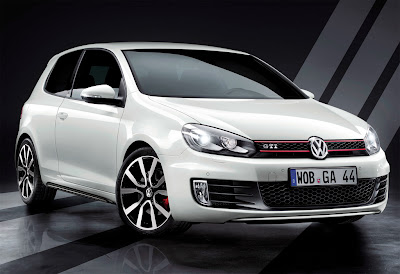
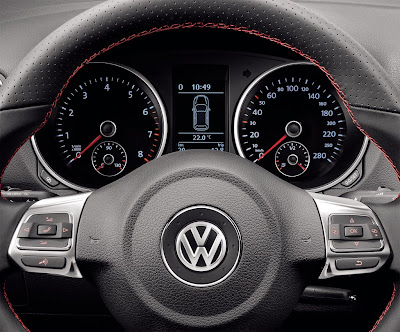
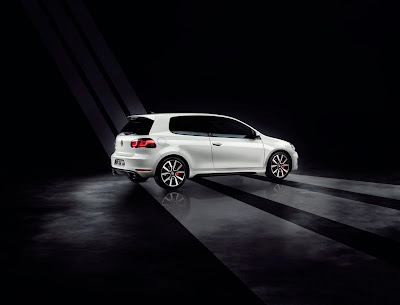
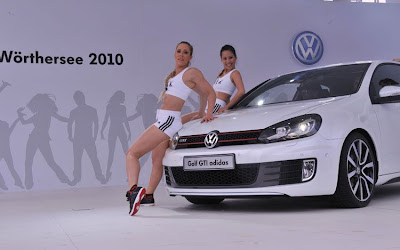
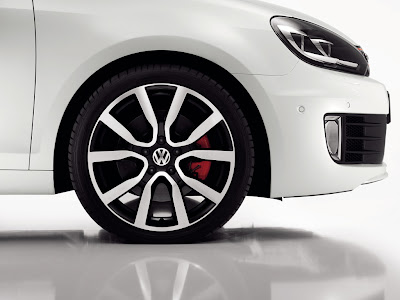
2012 Volkswagen Golf GTI cars pictures and reviews

2012 Volkswagen Golf GTI cars pictures and reviews
2010 Volkswagen Golf GTI adidas Front Angle View2010 Volkswagen Golf GTI adidas Badge2010 Volkswagen Golf GTI adidas Car Picture2010 Volkswagen Golf GTI adidas Gauges2010 Volkswagen Golf GTI adidas Side View2010 Volkswagen Golf GTI adidas Car Show2010 Volkswagen Golf GTI adidas Wheel

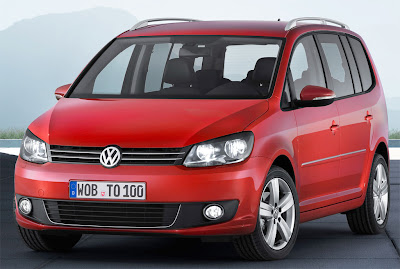
2012 Volkswagen Touran cars photo gallery and prices reviews

2012 Volkswagen Touran cars photo gallery and prices reviews
2011 Volkswagen Touran Front Angle View2011 Volkswagen Touran Side View2011 Volkswagen Touran Rear Angle View2011 Volkswagen Touran Steering Wheel2011 Volkswagen Touran First Look

Monday, May 16, 2011

2011 VW wallpapers and photos

2011 VW wallpapers and photos
Volkswagen is inviting designers, programmers, developers and interested users to help develop applications for the Infotainment systems of the future as part of the Open Innovation Contest, "App My Ride".