Thursday, September 2, 2010

FIAT Bugster – environmentally friendly fun

While most cars designed to protect the environment look, at best, well-meaning, at worst, plain dull, the FIAT Bugster is designed to make saving the planet outrageous fun.

fiat_bugster_01.jpg

As might be expected when a group of Brazilians and Italians, two countries not renowned for their wall-flower tendencies, got together to produce a car under the “Environment and Fun” banner they came up with the FIAT Bugster – an all electric off-road car designed to be charged at home.

But, for a technical first, the Bugster is not so much mid-engined, as mid-batteried. The 93 Lithium-Ion batteries, being the heaviest part of the drivetrain, have been mounted in the middle of the car to provide optimum weight distribution to achieve the best level of handling and roadholding – issues that usually don’t trouble the minds of people designing hybrids and electric cars.

fiat_bugster_02.jpg

To make the most of its 59 kW and 220 Nm of torque, the electric engine is mated to the same Dualogic sequential manual gearbox as used in the FIAT Punto, so as to provide a sporty response and yet more fun.

Beyond the engine and the bright green paint there are many more ingenious ideas – the tools in the tool kit are made from recycled plastic reinforced with natural sisal fibres; the seats are made from foam produced with 30 per cent recycled soya bean oil and body panels use clay that had been modified by nanotechnology to make it suitable for car bodywork use.

fiat_bugster_03.jpg

Entirely built by FIAT’s Brazilian division, the Bugster makes its world debut this week (30 October 2008) at the Sao Paulo Motor Show and is the latest in FIAT’s long history of environmental advanced cars. FIAT, for example, produce for the Latin American market the first car to be able to run on four different fuels, the FIAT Siena Tetrafuel, which uses pure ethanol, a petrol/ethanol blend, pure petrol or compressed natural gas.

fiat_bugster_04.jpg

Not only is this unique car capable of running on each of the four fuels, it automatically switches to whichever energy source is most suitable for the driving demands being placed on it.

Original Batmobile Spotted at Car Wash?

It’s no secret that Southern California is home to one of the best car cultures in the world. You can find a cruise or car show pretty much any day of the year, and it’s always amazing to see the vehicles that show up. It’s even incredible to see the kinds of cars that are simply out and about performing normal, everyday tasks. In addition to the usual Ferraris, Lamborghinis and Porsches, you can sometimes catch some truly unique cars out in the wild.

427batmo

Take, for instance, this original Batmobile that was out getting a wash and wax at the Car Spa in Newport Beach this weekend. It’s the fourth of four original Batmobiles built by George Barris back in 1966 and is known as the “dragster” version because of its 427ci Holman and Moody V8 under the hood and dual parachutes attached to the rear. The car was built to serve as an exhibition model and actually raced at several drag strips around the country back in the 1960’s. It also comes with a working saw blade that drops down at the front and can actually shoot flames out the back. We tip our hats to the fine gentleman that actually drives this thing on the street.

Wednesday, September 1, 2010

Scorpion sportscar would burn gasoline and hydrogen

Scorpion sportscar would burn gasoline and hydrogen
A Texas company is offering a glimpse of a high-end hydrogen-gasoline sportscar it hopes to sell by the fall
Rather than using fuel cells to power an electric motor, the Scorpion from Ronn Motor Company would have an internal combustion engine burning both gasoline and hydrogen, achieving 40 highway miles per gallon.

Unlike with a hydrogen fuel cell car, the Scorpion's "hydrogen on demand" system wouldn't require a high-pressure hydrogen storage tank. Nor would a driver need to find and fill up at a hydrogen fueling station.

Instead, electricity from the Scorpion's alternator sends an electric charge through the water in a storage tank, fracturing molecules and releasing hydrogen, which is injected into the motor, explained Ronn Maxwell, CEO of Ronn Motor in Horseshoe Bay, Texas.

"This means that as we're driving down the road, we're producing hydrogen in real time, and blending it with gasoline at a ratio of 30 to 40 percent," he said.

The hydrogen-gasoline hybrid technology comes from Hydrorunner.

"We are still using gasoline, but we're gonna be using 40 percent less," Maxwell said. "The hydrogen cleans up the emissions. It actually consumes carbon. It's not the perfect car, not electric, but it is something that'll work right now."

Ronn Motor showed off a working prototype of the Scorpion, sans body, Tuesday in downtown Austin.

The hydrogen internal combustion engine can achieve between 30 to 50 percent greater efficiency over standard gasoline cars, Maxwell added. Under the hood is a 2009 Acura 3.5 Vtech motor with 280-horsepower stock, or 450-horsepower with a twin turbo option. The car has a 6-speed manual transmission.

Ronn Motor has taken several orders so far and has plans to build 200 Scorpions this year, eventually ramping up to 500, Maxwell said. He believes his will be the first company to market a passenger car with a hydrogen-on-demand system, which gearheads already tinker with in private garages and which are available for the trucking industry.

Maxwell is targeting the sort of automotive aficionados who might collect Lamborghinis, Ferraris, or an electric Tesla, but said he wants to create a sedan next. It remains to be seen whether Ronn Motor will succeed in delivering its roadster to customers by October as planned.

The company's stock was listed on the Pink Sheets May 29.

Meanwhile, building the necessary fueling infrastructure remains just one of the barriers to wider adoption of hydrogen fuel cell cars, which primarily reside in the garages of a wealthy and famous few

Scorpion sportscar would burn gasoline and hydrogen

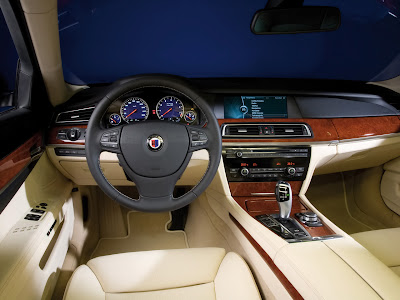
BMW ALPINA B7 Bi-Turbo

BMW ALPINA B7 Bi-TurboBMW ALPINA B7 Bi-Turbo

With the new BMW ALPINA B7 Bi-Turbo, ALPINA presents its fourth generation of automobiles based on the BMW 7 Series. Prominent predecessors include the BMW ALPINA B12 6.0 and B7, which raised the bar in the high-performance luxury saloon segment. Newly interpreted and in every way state-of-the-art, the B7 Bi-Turbo unites exclusiveness, athleticism and comfort in perfect harmony.

Yielding exquisite levels of torque and power from the charged 4.4 litre V8, and in conjunction with the electronically-adjustable suspension with active roll stabilisation, the B7 Bi-Turbo promises to offer a spectrum of driving experiences so varied as to be unheard of in this class of automobiles.

The evolution of the traditional 20-spoke 21” ALPINA CLASSIC wheels underline the fresh design language found throughout the B7 Bi-Turbo and impart it a distinctive appearance and powerful stance.

Powertrain

The Bi-Turbo model designation that now graces this flagship BMW ALPINA saloon hints at even more powerful and torque-laden performance over its predecessor, while simultaneously improving upon fuel economy.

The fully-aluminium, 4395 cm3 V8 aggregate yields 507 peak horsepower (373 kW) at a moderate 5500rpm, with a maximum torque of 700 Nm available between 3000-4750rpm.

Two especially for the ALPINA powerplant constructed turbochargers with generously-dimensioned turbine vanes are responsible for the forced induction. Thorough exploitation of the engine’s potential was achieved by means of optimising the indirect intercooler (air-water/water-air) with its short intake paths and flow-optimised intercooler tracts.

High-performance pistons are at work in the cylinders, carefully developed to harmonise with a compression of 9.2:1 and a maximum turbo boost of 1.0 bar. The result is a formidable specific output of 115hp (85kW) per litre, with a maximum average compression of 20.1 bar, a benchmark even amongst established sportscars.

One look at the torque and power diagram is enough to highlight that the B7 Bi-Turbo will accelerate fiercely and effortlessly from very low revs. Peak torque is available from an unusually broad range of rpm’s, ranging from 3,000 to 4,750 rpm. This wide powerband coupled with the exquisitely geared ZF six-speed automatic sport transmission pampers the occupants with remarkably high levels of smooth drivetrain comfort in every driving situation.

The ALPINA SWITCH-TRONIC, which has been programmed to shift exceptionally smooth and comfortable in Automatic mode, offers different shift characteristics for every taste and situation thanks to the additional Sport and Manual modes. Driving the B7 Bi-Turbo becomes an altogether different experience when using the buttons found on the back of the steering wheel for manually selecting the gears of the automatic transmission. This ensures shifts take place within a few hundred milliseconds and with only minimal interruption to the transmission of power, favourably comparable even to the best twin-clutch transmissions. As a result, the B7 Bi-Turbo sprints from 0-100 km/h in 4.7 seconds, vehemently pressing on to an electronically-limited 280 km/h top speed.

Chassis & Suspension

Long gone are the days when a purely “hard and sporty” ride was a sought-after attribute of suspension set-ups. Striving for truly neutral handling continues to be the intelligent way forward, yielding the best of what is technologically feasible.

In pursuit of this goal, marginally shorter and uniquely calibrated springs reduce front and rear ride height by 15mm and 10mm respectively. Together with the 21” wheel and tyre combination the suspension is at once sensitive to inputs and direct in its feel, yet free from the harshness of a purely sports-oriented suspension, imparting this large saloon with an agility usually only associated with much smaller sports saloons. The light-weight 21” wheels, with their new interpretation of the ALPINA CLASSIC wheel design, are shod with an especially selected staggered MICHELIN tyre set-up: 245/35 R21 front and 285/30 R21 rear. Foregoing Run-Flat technology, conventional tyres are used to ensure a supple, comfortable finesse that is rare today.

ALPINA have integrated state-of-the-art electronic suspension technologies, skilfully and subtly adjusting them to the demanding requirements of our customers. As part of the B7 Bi-Turbo standard equipment, the electronic suspension system with Dynamic Damping Control and Dynamic Drive (active roll stabilisation) enable the driver to select from three distinct suspension set-ups: Comfort, Normal and Sport. The B7 Bi-Turbo offers the driver unheard-of versatility, delivering on long-distance comfort just as readily as on back-road pace, always with a maximum of enjoyment and safety.

Design

At once dynamic, graceful and potent - the silhouette of the B7 Bi-Turbo is significantly influenced by the evolutionary new design of the 21” ALPINA CLASSIC wheels. A turbine-like three-dimensional curve guides each of the 20 spokes from the centre of the wheel to the rim, at which point they have a milled surface. Depending on the angle of the viewer, the rotational speed of the wheels and the light, the appearance of these classic wheels is constantly changing. Of course they continue to possess the refined tyre air valves, safely and attractively hidden away behind the lockable wheel covers.

In true “form-follows-function” fashion, the typical ALPINA front integrates the fresh-air requirements of the transmission and engine oil coolers, which are separated out of the main cooler module for improved efficiency. The design of the front and rear spoiler follows clearly aerodynamically-oriented interests, reducing lift at the front and rear by 30% and 15% respectively. Left and right, the exhaust system’s two double tailpipes are seamlessly integrated into the rear valance and are witness to the B7 Bi-Turbo’s potency.

When climbing into the B7 Bi-Turbo, one immediately takes note of the ALPINA door sill trims which are finely illuminated in blue. The SWITCH-TRONIC steering wheel is gloved and hand-stitched in the finest, most comfortable LAVALINA leather. In the driver’s line of sight, red pointers over a field of blue dials grace the instrument cluster, where a Black-Panel LCD screen is responsible for communicating driver-important information.

Exclusive interior luxury wood trim in the form of Myrtle Burl, a knotted burl of the Laurel only found on the Pacific Coast of the United States, provides a warm and traditional ambience. Optional ALPINA Piano Lacquer interior trim with its silver diagonal rhombs, offers a modern and just as exclusive alternative.

BMW ALPINA B7 Bi-TurboBMW ALPINA B7 Bi-Turbo

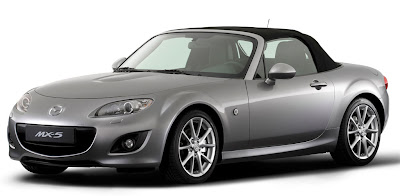
Mazda Mx5

Mazda Mx5Mazda Mx5Mazda Mx5
Mazda Mx5Mazda Mx5
Mazda Mx5Mazda Mx5
Mazda Mx5Mazda Mx5
Mazda Mx5

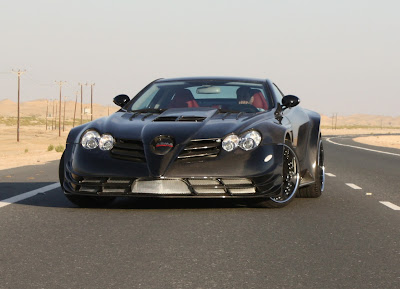
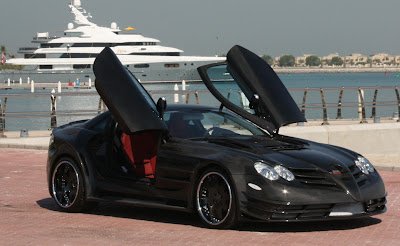
Mercedes McLaren SLR 722

Mercedes McLaren SLR 722Mercedes McLaren SLR 722Mercedes McLaren SLR 722
Mercedes McLaren SLR 722Mercedes McLaren SLR 722
Mercedes McLaren SLR 722

Honda Cars Review Honda Used Cars

honda civic type rHonda Civic type r
Honda NSX customHonda NSX custom
honda carsHonda cars
used Honda carsused Honda cars
honda hybrid carsHonda Hybrid cars
2008 honda cars2008 Honda cars
car wallpaper hondacar wallpaper Honda
HondaHonda cars
Honda concept carsHonda Concept cars
HOnda Civic CarsHonda Civic Cars